


NEEDLE PUNCH NON WOVEN FABRIC( NONWOVEN FELT FABRIC)
| RAW MARTERIAL | 100% Polyester Fibre, Polypropylene, Viscose |
| PRODUCT DESCRIPTION |
Technics: NeedlePunch Color: White-Grey-Black-Muti color Thickness: 0.4 mm – 15 mm Weight: 45gsm – 1000gsm Width: Up to 3m2 =126 inch Process: Adhesive back, Cutting Sheet, etc. |
| PACKAGING |
Roll, sheet / customer's request |
| ORIGIN | Vietnam |
| CERTIFICATION | GRS, OEKO-TEX 100, ISO 9001 |
| INCOTERMS | FOB, CIF, CFR, DDP, etc... |
| PAYMENT | T/T, L/C, etc.... |
| CAPACITY |
MOQ: 1.000 meter 10-15 Cont 40' per month Lead time for 1 container 40' : 20-30 days |
- Description
- Reviews (2)
FASMPO Needle Punched Nonwoven Fabric & Nonwoven Felt Fabric: Cost-Effective, High-Quality Material Solutions for Global Enterprises
In an increasingly volatile global supply chain, sourcing raw materials that meet strict technical specifications while maintaining competitive pricing is a vital strategic objective for procurement managers, executives, and B2B business development leads. Across industrial sectors—ranging from apparel, furniture, and automotive to environmental filtration and agriculture—Needle Punched Nonwoven Fabric and Nonwoven Felt Fabric serve as essential material links, directly influencing the durability, aesthetics, and total unit cost of finished products.
Recognizing common industry bottlenecks such as shipping delays, batch-to-batch weight inconsistencies, and rising freight expenses, FASMPO offers high-grade nonwoven material solutions originating directly from Vietnam. Backed by a large-scale monthly capacity of 33 containers and comprehensive international certifications, FASMPO serves as a premier Nonwoven Felt Fabric company dedicated to helping global B2B buyers lower input costs and build a competitive advantage in international markets.
- Target Audience: Corporate Executives, Purchasing Managers, Global Sourcing Specialists.
- Key Export Markets: United States, European Union, China, and major industrial hubs worldwide.
- Core Value Proposition: Precise basis weight control, rigorous quality assurance, space-saving vacuum packaging, and flexible trade arrangements.
What Is Needle Punched Nonwoven Fabric? How It Differs From Woven Felt and Nonwoven Felt Fabric
Making well-informed procurement decisions requires a clear technical understanding of material composition and physical behavior. In commercial terminology, the terms "woven felt" and Nonwoven Felt Fabric are often used interchangeably, yet their manufacturing methodologies differ significantly.
Needle Punched Nonwoven Fabric—frequently referred to in technical settings as nonwoven needle felt—is manufactured without traditional weaving or knitting processes. Production begins by carding synthetic fibers (typically polyester or polypropylene) into a loose web matrix. This web passes through specialized needle looms where thousands of barbed needles punch vertically through the fiber web at high speed. The mechanical interlocking of these fibers creates a dense, cohesive fabric with high tensile strength, uniform surface structure, and controllable thickness.
By contrast, conventional woven felt is created through standard loom-weaving procedures. Traditional woven felts prioritize soft hand-feel and thermal insulation, making them suitable primarily for fashion apparel or crafts. Industrial nonwoven needle felt, on the other hand, is engineered specifically to withstand mechanical stress, impact, friction, and elevated temperatures in demanding industrial environments.
Technical Comparison: Needle Punched Nonwoven Fabric vs. Traditional Woven Felt
|
Evaluation Criteria |
FASMPO Needle Punched Nonwoven Fabric |
Traditional Woven Felt |
|
Manufacturing Technology |
Mechanical fiber interlocking via barbed needle punching |
Traditional weaving or knitting process |
|
Tensile Strength & Durability |
Exceptional multi-directional tear resistance via randomized fiber orientation |
Moderate; dependent on warp and weft yarn direction |
|
Basis Weight Range (GSM) |
Broad flexibility (50 gsm to over 1000 gsm) |
Restricted; typically limited to lighter or medium weights |
|
Thickness Capability |
Versatile thickness profiling from 0.8 mm to 30.0 mm |
Thinner profile; difficult to achieve high thickness with compression resilience |
|
Cost Efficiency |
High production yield; optimized for volume manufacturing |
Higher cost structure due to complex weaving cycles |
|
Functional Additives |
Easily integrated with flame retardant, water repellent, and filtration treatments |
Primarily decorative or standard apparel applications |
Selecting the correct grade of Needle Punched Nonwoven Fabric allows manufacturing plants to maintain strict product durability standards while achieving substantial savings on per-unit raw material inputs.
Technical Specifications (TDS) for B2B Procurement Managers
To streamline sample testing and verify material compatibility with your production lines, FASMPO provides a standard Technical Data Sheet (TDS) for our export-grade nonwoven fabrics:
Technical Data Sheet (TDS)
|
Parameter |
FASMPO Standard Range |
Testing Method / Notes |
|
Raw Material Composition |
100% Polyester (PET), Polypropylene (PP), or Blended |
Global Recycled Standard (GRS) eco-friendly series available |
|
Basis Weight (GSM) |
50 gsm – 1200 gsm (Tolerance ± 5%) |
Fully customizable to buyer specifications |
|
Thickness |
0.8 mm – 30.0 mm (Tolerance ± 0.2 mm) |
Measured under standardized press foot gauge |
|
Roll Width |
Up to 3.2 meters (Custom slitting available) |
Slit roll capabilities down to 10 cm widths |
|
Color Spectrum |
White, Gray, Black, Natural, and Custom Color-Matching |
High colorfastness with minimal batch variation |
|
Surface Finishing |
Singed, Calendered, Chemical Bonded |
Enhances surface smoothness or structural rigidity |
|
Special Functionality |
Flame Retardant, Water Repellent, Anti-Bacterial, Anti-UV |
Custom engineered per production order |
Through precise adjustments in basis weight (GSM) and thickness, FASMPO’s Nonwoven Felt Fabric consistently passes stringent international tests for tensile strength, tear propagation, puncture resistance, and air permeability required by strict buyers in North America and Europe.
Versatile Industrial Applications of FASMPO Nonwoven Needle Felt
Thanks to its interlocking fiber structure, Needle Punched Nonwoven Fabric serves as a high-performance alternative to traditional textiles across several primary manufacturing sectors.
1. Apparel, Footwear & Leather Goods
In the export footwear and garments sector, nonwoven needle felt acts as an essential structural reinforcement layer that improves product comfort and longevity.
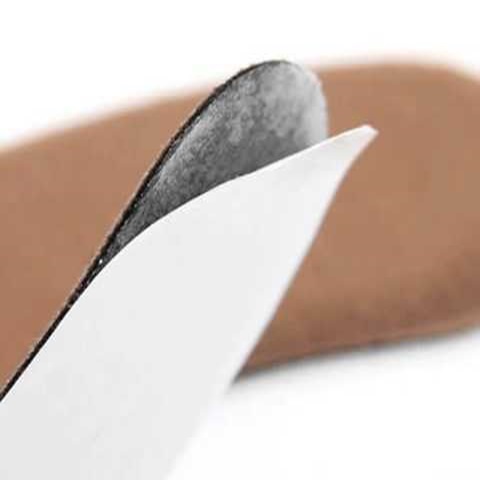
- Footwear Insoles & Linings: Used for shoe insoles, boot collar pads, and cushion inserts due to its moisture absorption, anti-friction properties, and step-in comfort.
- Garment Interlinings: Functions as embroidery backing, collar stays, winter coat linings, and suit shoulder padding to maintain garment silhouette after repeated laundering.
- Bags & Luggage: Serves as shock-absorbing protective padding in laptop compartments and structural lining for premium handbags.
2. Furniture Upholstery & Mattress Manufacturing
High-density Nonwoven Felt Fabric is a foundational component in upholstered furniture and spring mattress manufacturing.
- Pocket Spring Insulators: Acts as a protective isolation layer between inner metal springs and outer foam layers, eliminating spring-feel, noise, and mechanical wear over long-term use.
- Sofa Dust Covers & Frame Padding: Applied as protective bottom dust covers, backrest linings, and armrest padding offering high tensile resistance against tearing.
- Carpet Underlayment: Functions as foot-cushioning underlayment, event carpeting, or structural backing for decorative rugs.
3. Automotive & Transportation
Automotive supply chains require materials that meet rigorous safety, acoustic attenuation, and thermal stability requirements.
- Acoustic Insulation: Applied as sound-dampening firewall liners, headliners, and door panel wraps to absorb engine noise and road vibration.
- Trunk Liners & Floor Mats: Serves as durable carpeting for trunk spaces and floor mats due to its high abrasion resistance and ease of cleaning.
- Thermal Management: Enhances thermal retention within cabin climate control systems while protecting heat-sensitive interior components.
4. Environmental Dust Filtration & Air Treatment
Featuring a porous, three-dimensional void structure, Needle Punched Nonwoven Fabric is an ideal filter media for industrial air and liquid filtration systems.
- Industrial Dust Collector Bags: Channeled into filter bags for cement plants, thermal power stations, metallurgy, and woodworking facilities to trap sub-micron particulates.
- Liquid Filtration: Utilized in wastewater treatment plants, oil-water separation systems, and chemical fluid processing.
- Filter Surface Treatments: Combined with calendering or membrane lamination to allow easy dust cake release during pulse-jet cleaning cycles, extending bag lifespan.
5. Daily Consumer Goods & Household Products
- Furniture Floor Protectors: Cut into felt pads to protect hardwood floors from furniture legs; also used for hanging planters and collapsible storage baskets.
- Cleaning Materials: Manufactured into heavy-duty industrial wipes and electrostatic floor dusters.
- Travel Accessories: Converted into insulated cooler bags and protective equipment sleeves.
6. Agriculture & Geotextile Engineering
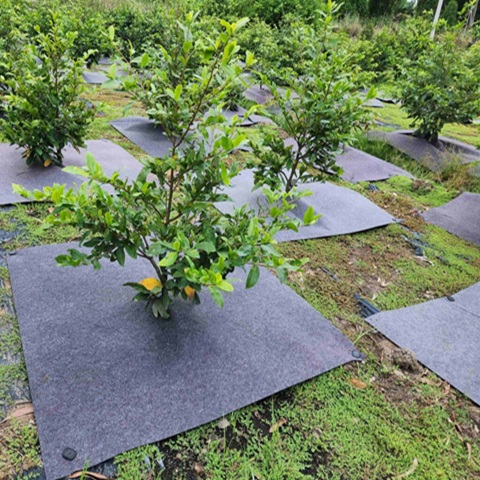
- Weed Control & Greenhouse Blankets: Controls weed growth, conserves soil moisture, and protects crop roots against frost while allowing air and water permeability.
- Geotextile Fabrics: Provides soil separation, subgrade stabilization, and erosion control for civil engineering, road construction, and agricultural reservoirs.
Key Criteria for Selecting a Reliable Nonwoven Felt Fabric Company
Sourcing materials from an unverified vendor can lead to costly consequences, such as production delays, customs rejections, or environmental compliance failures. International procurement teams should evaluate prospective suppliers against the following operational criteria:
1. Plant Capacity & Scale
A trustworthy Nonwoven Felt Fabric company must operate automated, modern machinery capable of sustaining consistent output. With a production output of 33 x 40ft containers per month, FASMPO supports high-volume orders and urgent delivery schedules without compromising batch-to-batch quality uniformity.
2. International Quality Certifications
Compliance credentials serve as the necessary documentation to clear international regulatory hurdles smoothly. FASMPO maintains a comprehensive quality management framework:
- ISO Quality Management Certification: Guarantees that every step—from raw fiber inspection and needle punching to final roll packaging—follows international quality controls.
- Global Recycled Standard (GRS): Verifies recycled fiber content, supporting green procurement initiatives and sustainability mandates in European and American markets.
- OEKO-TEX Standard 100: Certifies that materials are free from harmful substances, making them safe for consumer garment and furniture applications.
3. Dynamic Quality Control (QC)
Inconsistencies in basis weight (GSM) or thickness across fabric rolls are common defects in unstandardized production facilities. At FASMPO, online automatic weighing systems and digital tensile testing equipment continually monitor line output to maintain tight tolerances, ensuring 100% material uniformity before roll packing.
Cost Optimization & International Logistics Solutions
A major consideration for international buyers importing nonwoven materials is ocean freight efficiency. Because needle punched felts possess high physical bulk, uncompressed shipments incur high volumetric freight costs relative to weight.
Space-Saving Vacuum Packaging Solutions
FASMPO utilizes tight roll winding combined with vacuum compression and dual-layer protective PE film wrapping. This packaging process offers tangible benefits:
- 30% to 50% Reduction in Roll Volume: Significantly increases the total linear meters loaded per 40ft High Cube (40HQ) container.
- Complete Product Protection: Seals out moisture, humidity, mold, and dirt during extended multi-week ocean transit.
- Reduced Warehousing Footprint: Minimizes required storage floor space at your manufacturing facility prior to processing.
Flexible Trade Terms & Secure Payment Options
To accommodate international procurement policies, FASMPO supports standard commercial terms and secure financial instruments:
- Incoterms:
- FOB (Free on Board): Port delivery across major ocean terminals in Vietnam (Cat Lai Port, Cai Mep Port, Haiphong Port). Ideal for companies managing their own ocean freight contracts.
- CNF / CFR (Cost and Freight): FASMPO manages freight logistics to your designated port of destination, providing predictable landed costs.
- Payment Methods:
- T/T (Telegraphic Transfer): Standard advance deposit with balance payment settled against shipping documents.
- L/C (Letter of Credit): Irrevocable sight Letter of Credit issued by reputable international banks, offering legal security for high-value contracts.
Custom OEM/ODM Production Process at FASMPO
FASMPO utilizes a streamlined 5-step collaboration workflow designed to expedite sample development and order fulfillment:
- Step 1: Technical Requirement Analysis
- Our international sales division gathers your full specification set: basis weight (GSM), thickness, color, roll width, industry application, and estimated volume.
- Step 2: Sample Matching & Quotation
- Within 24 hours, our engineering team analyzes your reference sample or recommends an equivalent stock grade. Competitive FOB or CNF pricing is submitted for evaluation.
- Step 3: Pre-Production Sample Approval
- FASMPO manufactures a trial batch and dispatches airmail samples for physical testing, surface inspection, and line trials before final contract signing.
- Step 4: Mass Production & In-Line QC
- Upon contract execution and payment confirmation (T/T or L/C), mass production begins. Our QC team monitors needle density, basis weight tolerance, and tensile performance on every shift.
- Step 5: Packaging, Container Loading & Documentation
- Finished rolls are vacuum packed, stuffed into containers, and dispatched to the port. Full export document sets (Commercial Invoice, Packing List, Ocean Bill of Lading, Certificate of Origin, and Quality Certificates) are promptly processed and delivered.
Conclusion
In a competitive global marketplace, partnering with a dependable Nonwoven Felt Fabric company like FASMPO is a strategic move to secure raw material consistency, maintain production schedules, and lower unit costs.
With a robust capacity of 33 containers per month, clear Vietnam country-of-origin advantages, and full ISO, GRS, and OEKO-TEX certification, FASMPO is prepared to fulfill technical requirements for buyers in the US, Europe, China, and global markets.
Request Sample Swatches & Export Quotations
Are you seeking a reliable manufacturing partner for high-grade nonwoven materials? Contact FASMPO’s export sales team today to:
- Receive a complimentary Sample Swatch Kit delivered to your office.
- Get a competitive FOB or CNF Price Quote tailored to your project requirements.
- Consult with our technical team on custom specifications and space-saving freight packaging.
Please contact us at the bottom of the page or request a quote at the product image.
- Our Facotory : Click here
- Factory's products: Click here
- Free Sample : Click Here
- Video's product:
FASMPO – the leading exporter in the Vietnamese market
2

Good product, i bought here 20'ft with fob price
Hi, I’m looking for a factory who can produce a bigger amount of needle punch non woven felt made in 100 % hemp, thicknesses 2 millimeter, I want it cut in smaller pieces like 3x3 centimeters and wrapped in bales of 200 - 400 kilograms
It this anything that you would be able to produce ?
Best regards
Kristian Skovrider
Related Products


